

Self-Guided Pilgrimage
Spain: French Camino
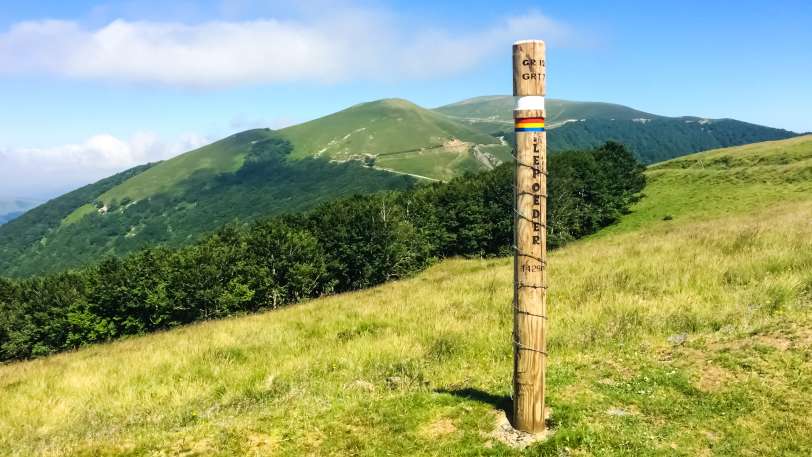
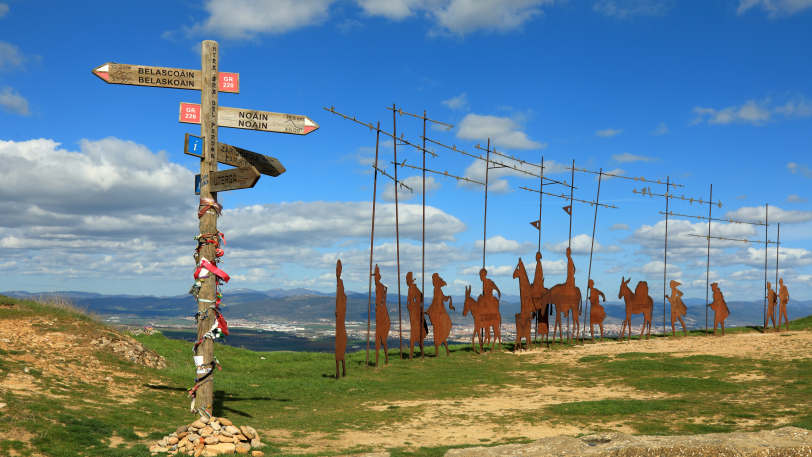
Begin your journey in Leon, one of the most significant cities on the Camino Frances, and follow the final stages of the Camino de Santiago towards Santiago de Compostela. Leaving the Castilian plateau behind, the path climbs into the wild Leon mountains before opening into the rolling green hills of Galicia. Each day brings something new, from Gaudi’s remarkable Episcopal Palace in Astorga to the symbolic Cruz de Ferro, and from the thatched pallozas of O Cebreiro to the Celtic character of rural Galicia. Your walk concludes in the Plaza del Obradoiro, where the cathedral of Santiago de Compostela has welcomed pilgrims from the Camino Frances for generations, a fitting place to pause and reflect on the journey completed.
Our travel specialists can arrange flights, rail and transfers to this holiday from wherever you are. Call us to plan your journey. +44 1606 720099

Arrive in Leon, an important city on the Camino Frances, and settle into your accommodation. This lively city is the perfect place to begin your Camino. If times allows, explore its Gothic cathedral, the Church of San Isidoro and the old quarter around the Plaza Mayor, a wonderful place for a peaceful evening stroll. Its narrow lanes and welcoming squares set a gentle tone for the beginning of your Camino de Santiago journey.

After a transfer to Virgen del Camino, your journey today will continue through farmland and quiet hamlets. By day’s end you will reach Hospital de orbigo, where you cross the impressive twenty-arched medieval bridge, one of the highlights on this section of the Camino.

You will have plenty of variety today, as the flatlands give way to gentle hills and peaceful oak groves. As your path continues, the spires of Astorga will gradually appear ahead. This lively town is rich in history, where the Camino Frances meets the Via de la Plata. Take time to visit Gaudi’s Episcopal Palace, Astorga Cathedral, and the winding streets of the old town, a place rich in pilgrimage history.

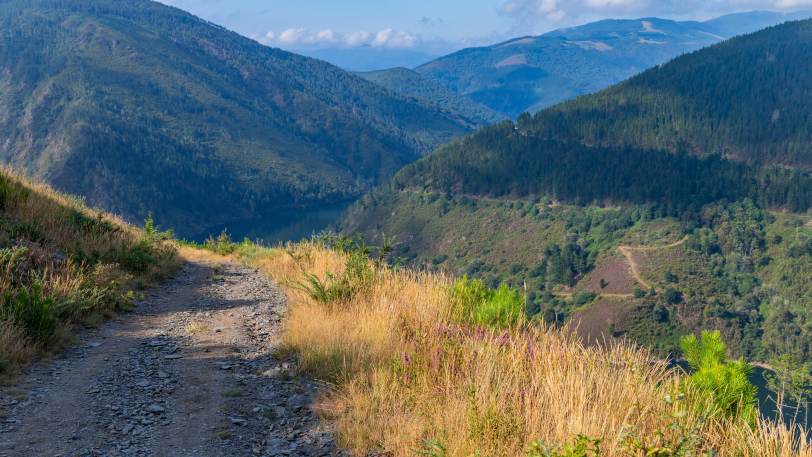
Leaving Astorga, the path climbs steadily into the Leon mountains passing through peaceful stone villages that have been brought back to life by the Camino. Step by step the views open up, and by late afternoon you will arrive in Rabanal del Camino, a once-abandoned village now restored along the French Way, offering a calm place for pilgrims to rest.

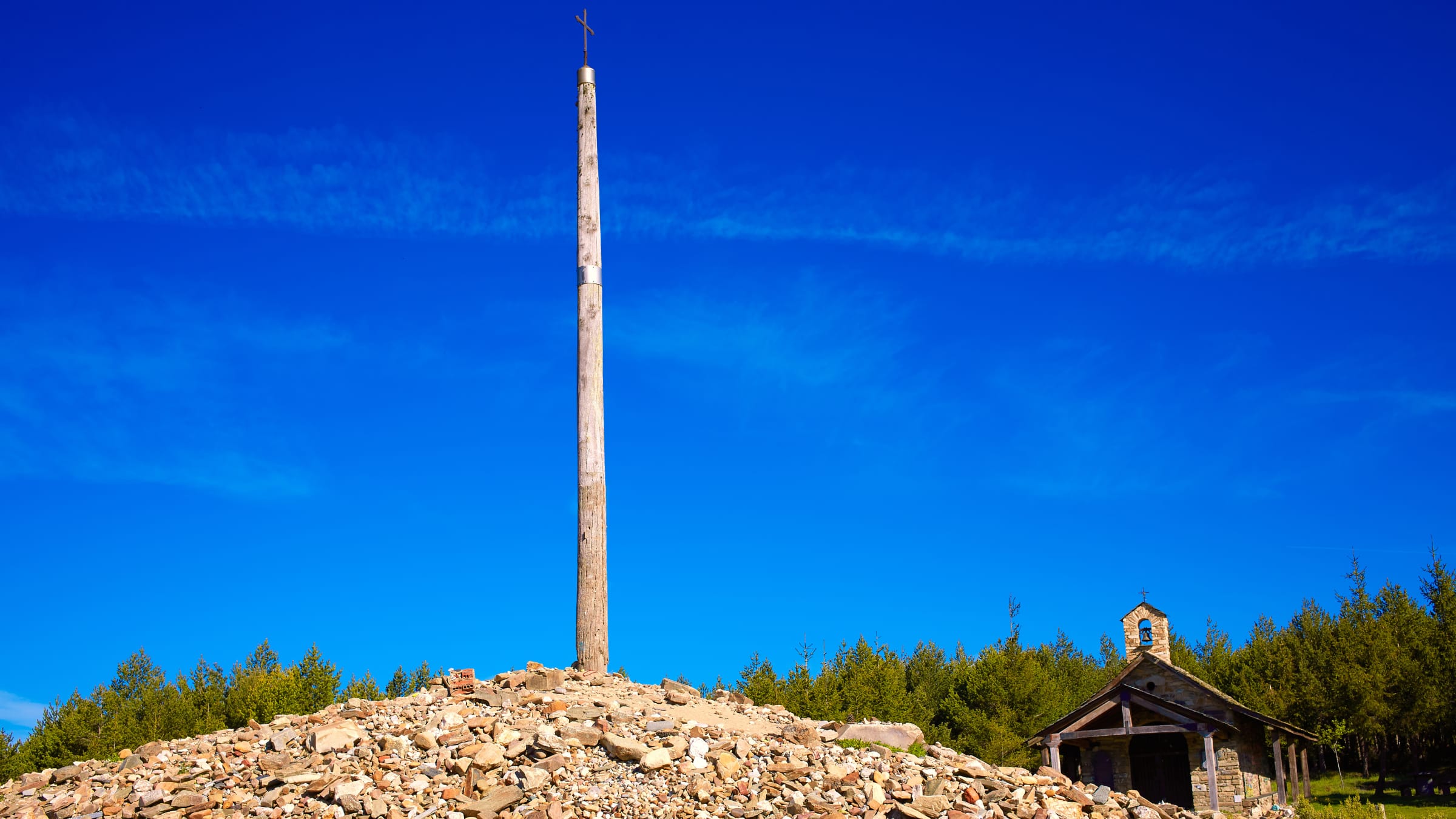
The walk from Rabanal brings you to one of the most symbolic points on the Camino de Santiago: the Cruz de Ferro at the Puerto de Irago, the highest point on this stretch of the Camino Frances. Here many pilgrims pause to place a stone brought from home, a simple tradition full of meaning. The route then descends through heather-clad slopes to the small mountain village of Acebo.
Today the path descends through moorland into the fertile Bierzo valley, a land of vineyards, orchards and soft rolling hills. The day ends in Ponferrada, where you can explore the impressive 13th-century Templar Castle, a striking reminder of medieval pilgrimage history.
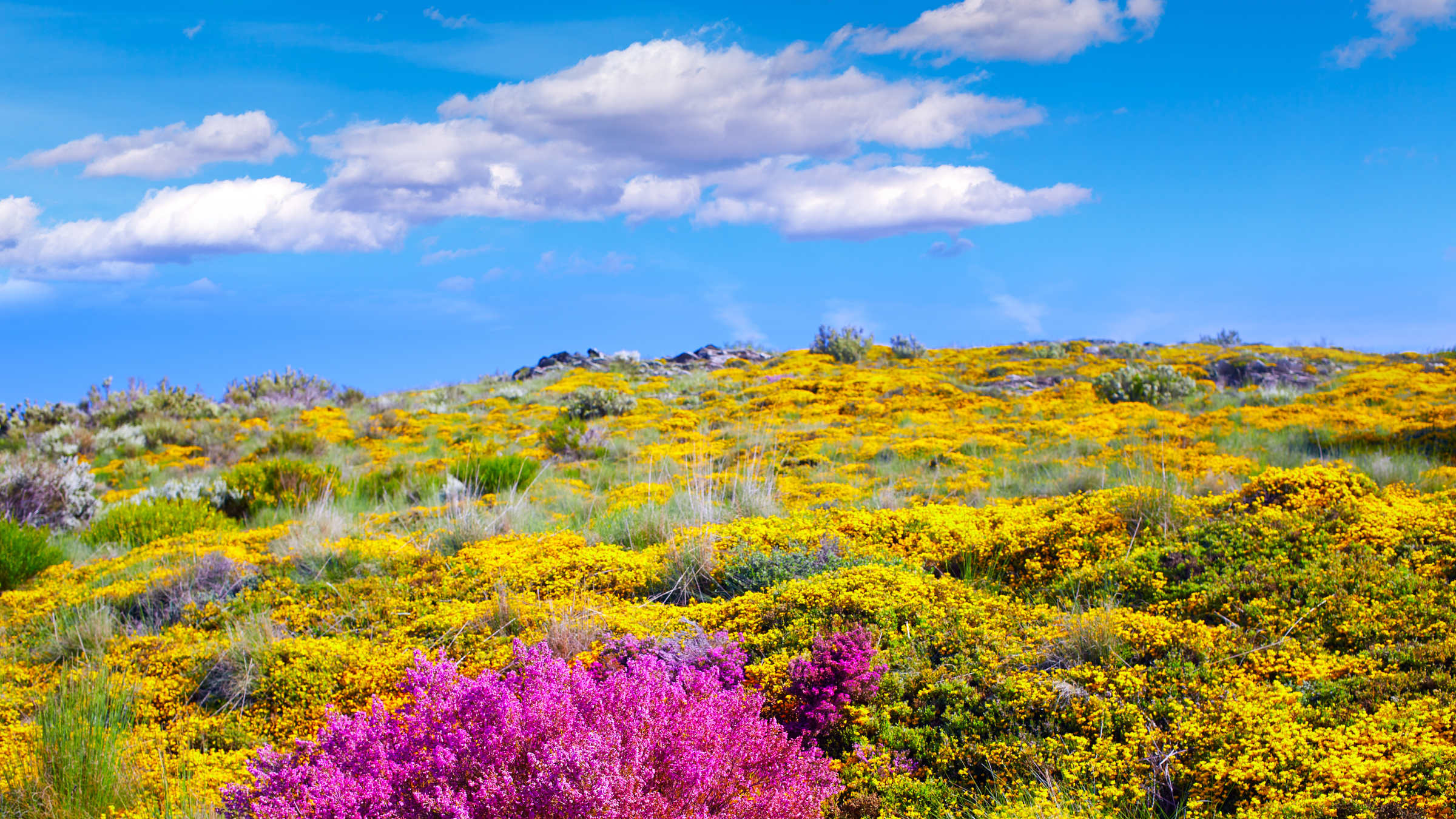
Walk west through the Bierzo valley, passing vineyards and the towns of Cacabelos and Camponaraya, known for their beautiful traditional architecture. On arrival in Villafranca del Bierzo, it is worth visiting the Church of Santiago, once a place of compassion where pilgrims too weary to go on were granted the same blessings as those who reached Santiago de Compostela. This tradition gives the town a lasting importance on the Camino Frances.

Leaving Villafranca del Bierzo, you will have a gentle day through lush valley, small villages and chestnut woods. The pace slows as the landscape begins to rise towards the Galician hills. Spend the night in La Portela de Valcarce, a peaceful hamlet at the foot of the climb to O Cebreiro – one of the most cherished points on the Camino de Santiago.
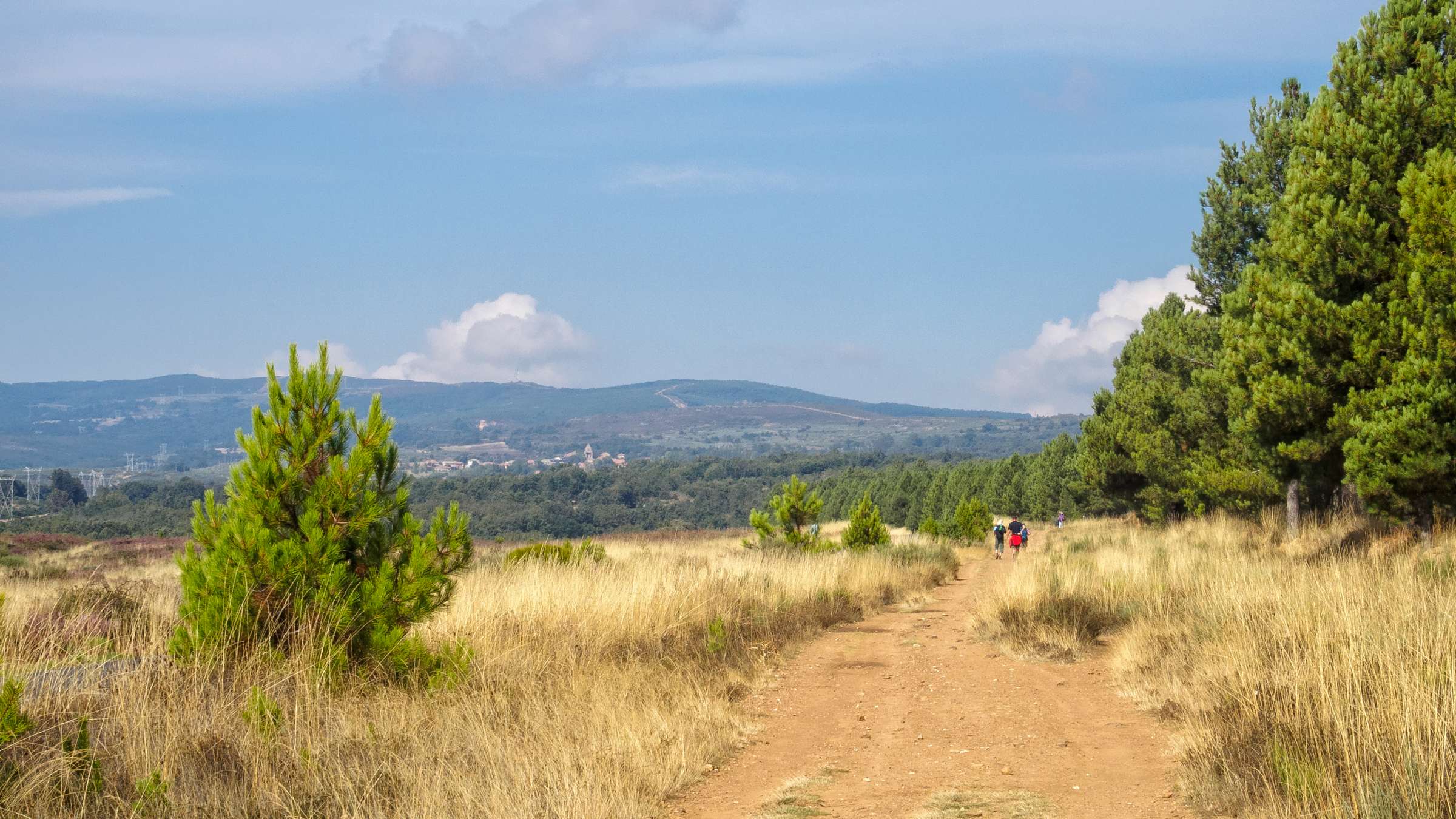
A demanding but rewarding ascent brings you to the emblematic village of O Cebreiro, known for its Celtic atmosphere and traditional thatched pallozas, ancient thatched stone dwellings that feel unchanged by time. Reaching O Cebreiro is a highlight of the Camino, both for its beauty and its sense of tradition.
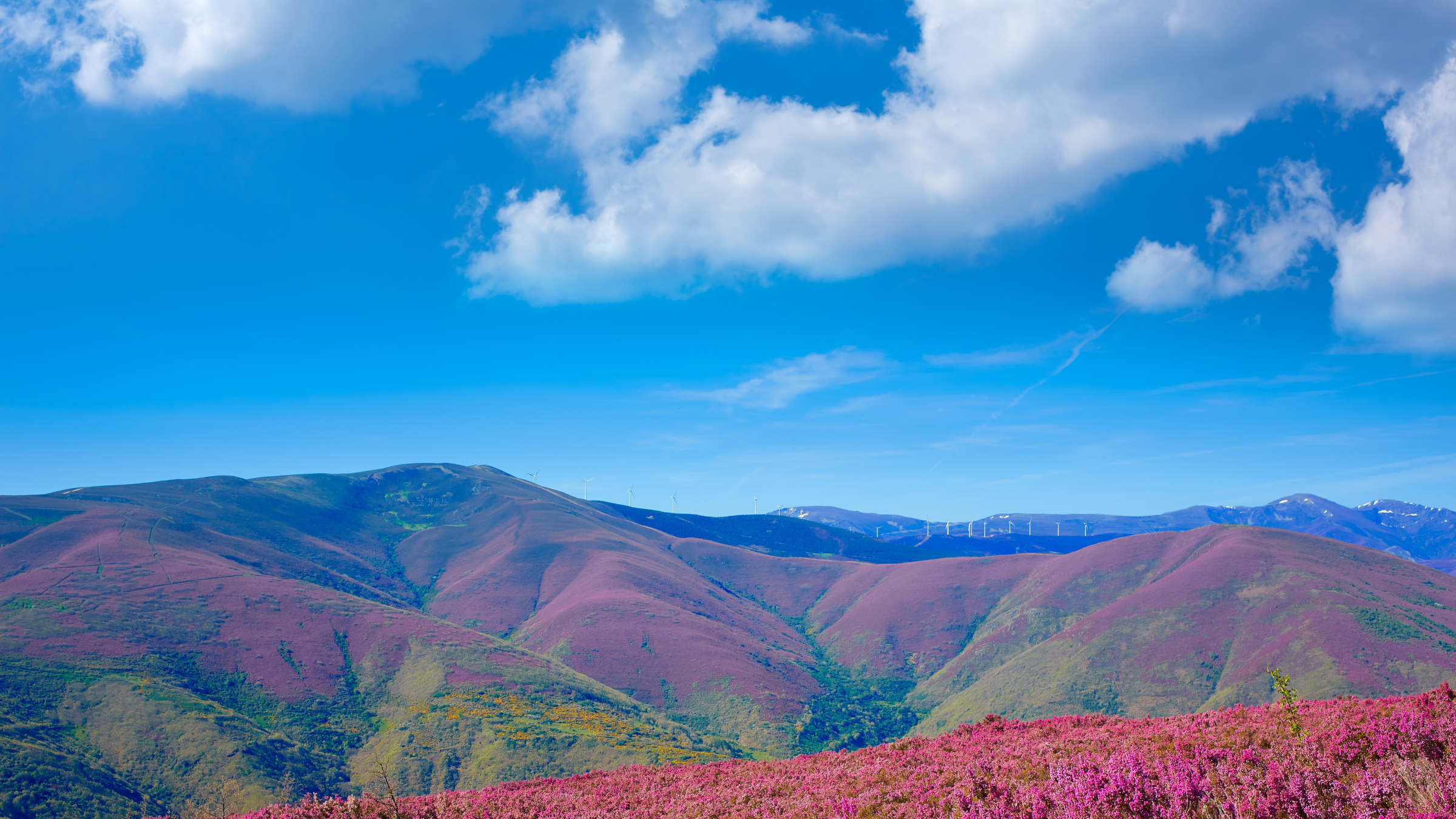
From the hilltop village of O Cebreiro, your journey continues along a ridge with wide views across Galicia before beginning its long descent. This stage marks your first full day in Galicia. The trail continues to gradually descend through rolling green hillsides and hamlets that add to the Celtic character of the region. The stage finishes in Triacastela, a modest but welcoming town, before a short transfer to Samos, where you spend the night near its historic monastery.
A morning transfer takes you back to Triacastela to rejoin the Camino. From here the trail leads through Galicia’s rolling countryside and quiet hamlets, where you’ll see the first horreos, the region’s traditional stone granaries. The stage ends in Sarria, a lively town with a hillside medieval quarter, often considered the gateway for pilgrims beginning the final 100 km of the Camino de Santiago to Santiago de Compostela.
Your walk from Sarria winds through woodland and rolling farmland, crossing rivers and passing quiet hamlets. The Romanesque Asperra Bridge is an early highlight, while traditional villages such as Morgade and Ferreiros give a glimpse of rural life in Galicia. The day ends in Portomarin, a striking hilltop town rebuilt stone by stone after its original site by River Mino was flooded. When the waters are low, the ruins of the old town can still be seen.
As you leave Portomarin by its imposing staircase, you journey will cross the River Mino before climbing gradually through farmland, oak woods and eucalyptus groves. Along the way you wiill pass the stone cross of Ligonde, set among the trees, before arriving in Palas de Rei. Its name means ‘The King’s Palace’, though today little remains of its royal past beyond the name itself.
Continue your journey from Palas de Rei through the rolling countryside and past a series of welcoming villages. In Casanova, Leboreiro and Furelos you can admire traditional Galician architecture, from noble pazos to the horreos that often stand beside them. Your day ends in Melide, known for its market and famous Pulpo a Feira (octopus dish), makes a fitting place to spend the night and enjoy the local hospitality.
Your Camino continues through quiet farmland and eucalyptus woodland, crossing small streams and passing hamlets. This gentle stage offers a mix of shaded paths and open countryside, with plenty of opportunities to stop at traditional cafes along the way. The day ends in Arzua, a welcoming town with medieval roots and the last major stop before Santiago de Compostela.
The Camino from Arzua to O Pedrouzo is a comfortable and scenic stage, mainly on shaded woodland paths and quiet country lanes. The route passes through small Galician villages with cafes and rest stops, making it ideal for an easy day’s walk. Reaching O Pedrouzo offers a comfortable place to rest before the final day of the Camino Frances to Santiago de Compostela.
The final walk takes you over Monte do Gozo, where the towers of Santiago de Compostela first appear on the horizon. From here, the path descends into the city, winding through the Porta do Camino and the narrow streets of the old quarter. At last you reach the Plaza del Obradoiro, where the cathedral rises as the symbolic end of the Camino, a place to pause, reflect and celebrate the journey’s completion.
Leave Santiago de Compostela and onward travels.
Enjoy the rest of your day exploring the town, and consider booking an extra night before heading home.
Independent service reviews collected by Feefo.
10.0
Kg CO₂e
per person, per night
Relative to other Headwater trips
We measure emissions from the parts of the holiday we organise — including accommodation, in-trip transport, meals and activities — and express them as CO₂e per person, per night. Our label doesn’t include your travel to and from the start of the trip. As a Certified B Corp, Headwater is committed to reducing this figure and to positively impacting local communities, the local environment and our staff. Learn more
A pilgrimage walking holiday is more than just a journey, it’s a chance to slow down, reflect, and immerse yourself in centuries of history and culture. Traditionally, pilgrimages were spiritual routes, but today they appeal to anyone seeking meaningful travel.
You will usually follow well-trodden paths through charming villages, rolling countryside, and vibrant towns, connecting with local traditions along the way. It’s about walking with purpose, enjoying the rhythm of the trail, and discovering the stories that shape these iconic routes.
Yes, if you’d like to collect stamps along the way and receive the official Compostela certificate in Santiago. The pilgrim passport, or credencial, is a wonderful keepsake of your journey, it’s stamped at churches, cafés, and hotels as you progress. Even if you’re not walking for religious reasons, it adds a lovely sense of occasion and helps you access pilgrim menus and accommodation.
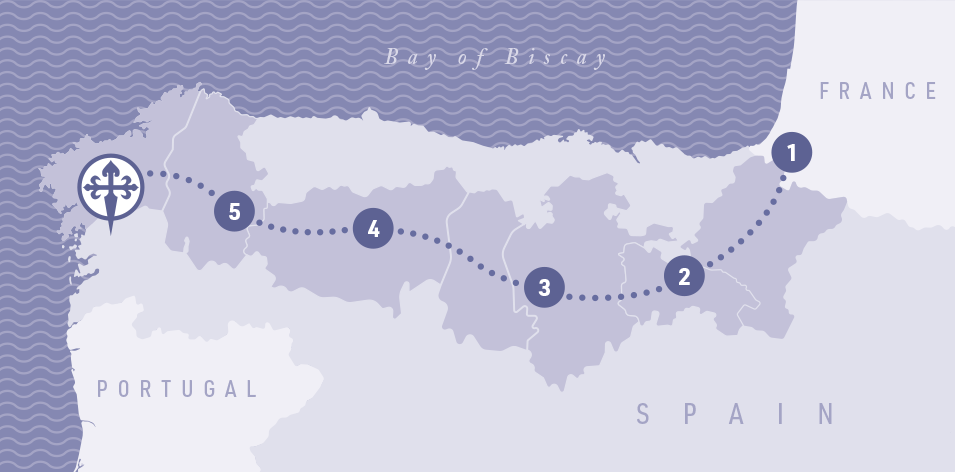
The full Camino Frances stretches around 780 km (485 miles) from St. Jean Pied de Port in France to Santiago de Compostela in Spain. Most walkers take about 30–35 days to complete the entire route, averaging 20–25 km per day. If you’re short on time, you can choose to complete only a section—many opt for the final 100 km from Sarria to Santiago, which takes roughly a week.
Spring (April–June) and autumn (September–October) are ideal. You will enjoy mild temperatures, fewer crowds, and landscapes at their most beautiful, think wildflowers in spring and golden vineyards in autumn. Summer is popular but can be hot and busy.
Pack light, comfort is key! Essentials include:
Lightweight, breathable clothing for layering
Sturdy walking boots (well broken-in)
Rain jacket and quick-dry gear
Reusable water bottle
Basic first aid kit (blister care is a must)
Small daypack with good support
Repelent for ticks and insects
Remember, laundry facilities are common along the route, so less is more.
If you have luggage transfers booked, the service is limited to one item per person. Please restrict the weight of each piece of
luggage to no more than 20kg. There may be an additional charges should you bring more luggage, please advise us prior
to departure so any extra luggage services can be arranged.
At your first hotel, please mark your bags with the Surname of the lead booker and number each bag (1 of 2, 2 of 2
etc.). Please also ensure that where possible you lock your bags and leave nothing valuable in them. Please note we cannot
be held responsible for any damage.
Please have your bags ready for collection by 8am. We make every effort to deliver your luggage to the next hotel by 6pm,
please contact us locally if your luggage has not arrived by this time.
On a Headwater holiday, you’ll stay in handpicked, characterful hotels and guesthouses, chosen for their comfort and local charm. You will be greeted by welcoming hosts, hearty regional meals, and peaceful night’s of sleep after a day on the trail. It’s a step up from the traditional pilgrim albergues, perfect if you want the Camino experience with a little extra comfort.