Self-Guided Pilgrimage
France
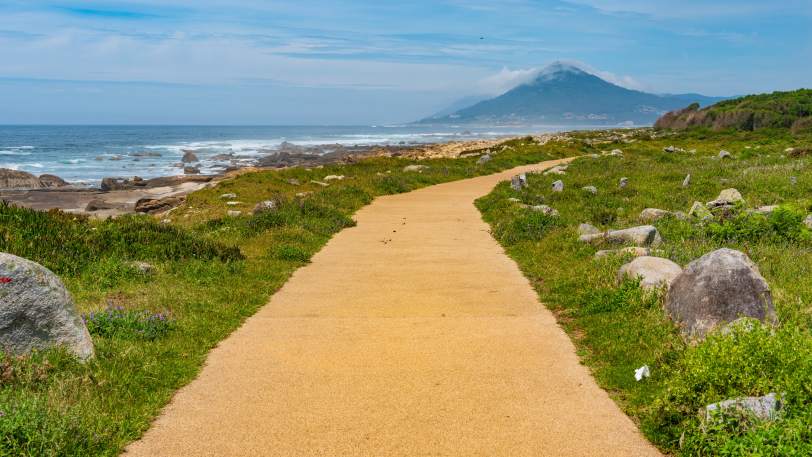
The Le Puy Camino is one of the most historic and traditional starting points for the French routes that eventually join the Camino de Santiago.
Our travel specialists can arrange flights, rail and transfers to this holiday from wherever you are. Call us to plan your journey. +44 1606 720099
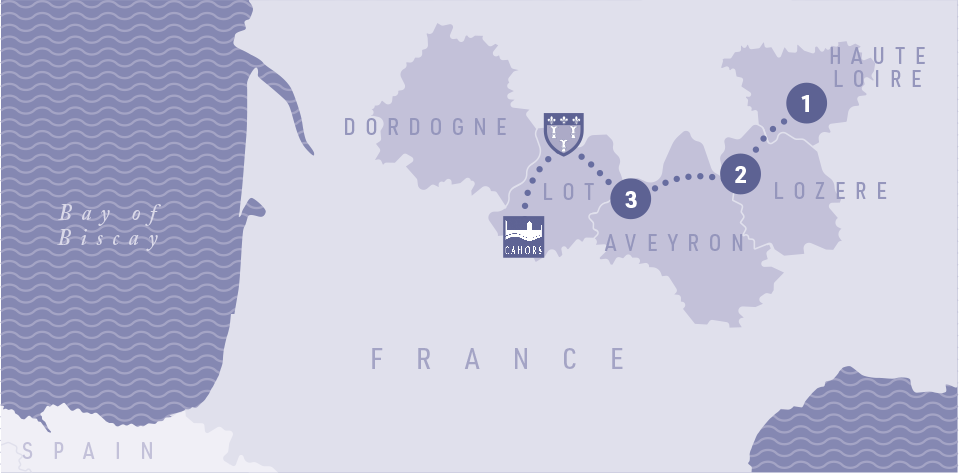

Leaving behind the magnificent architecture and volcanic landmarks of Le Puy-en-Velay, the trail takes you into the green landscapes of the Velay region. The first ascent provides spectacular views leading you through mountainous terrain and crossing the river gorges near Saint-Privat-d’Allier. The route then leads you to the rugged Margeride mountains, where thick pine woods and moorlands dominate the surroundings.
You pass through several ancient villages like Saugues, giving you a strong sense of the path’s long history and isolation. Approaching Aumont-Aubrac, the scenery transitions dramatically as you arrive at the basalt plateau of the Aubrac marking the end of your journey.
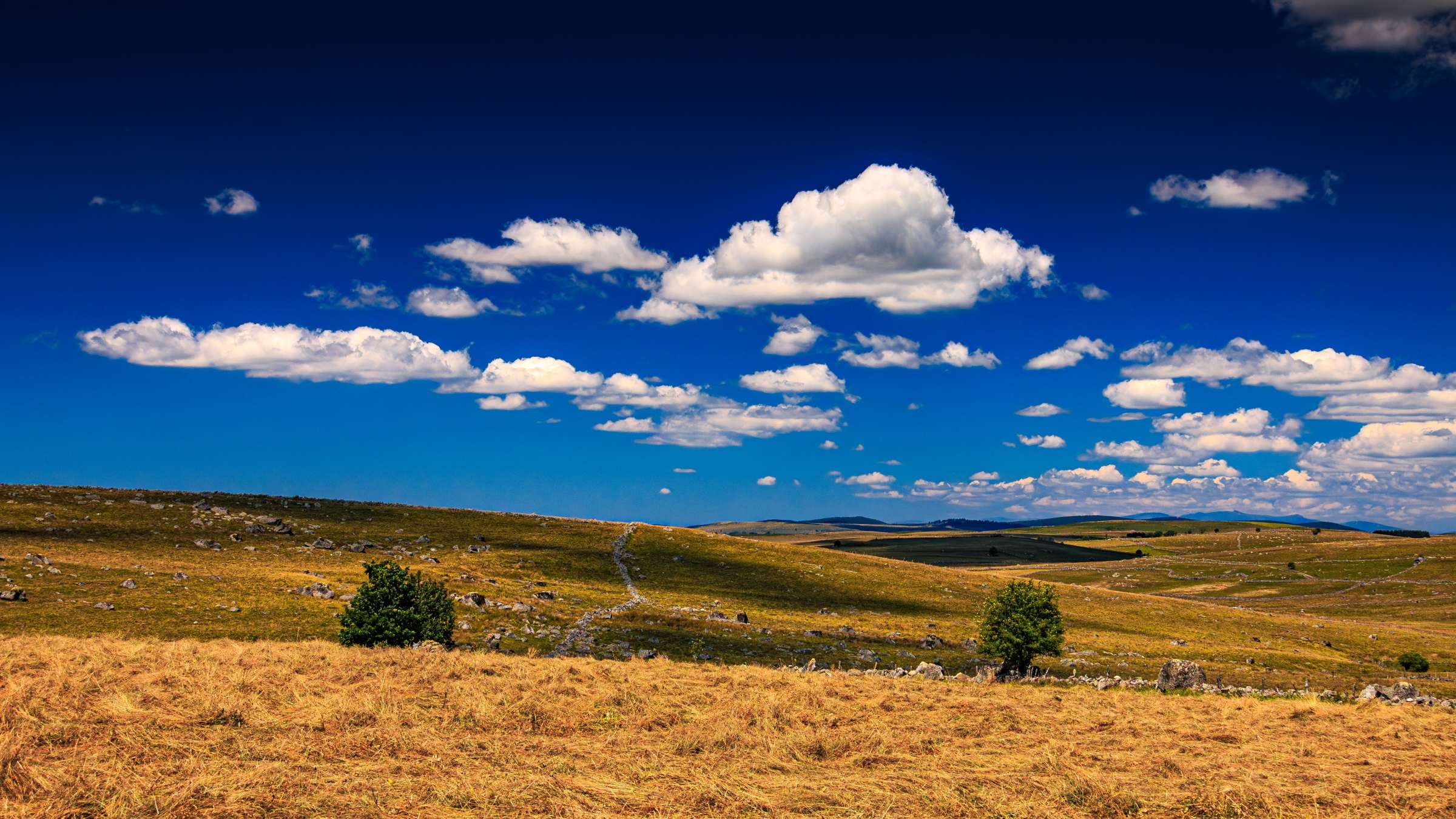
Departing from the high altitude village of Aumont-Aubrac, the path carries you onto the broad, windswept reaches of the Aubrac plateau. This is the highest and most remote stretch of the Le Puy route, where the path crosses ancient volcanic meadows marked by burons, old stone shelters once used by shepherds, and long lines of dry stone walls. After you make your way past the historic pilgrim refuge of Aubrac, the landscape begins a long and satisfying descent. The terrain quickly changes as you enter the fertile Lot Valley, where vegetation thickens and the climate softens and the trail follows the river through some of France’s most quaint villages. Among them are Saint-Come-d’Olt, known for its magnificent twisted church spire. The final descent leads you to Conques, nestled in a deep gorge, where the stunning UNESCO listed Sainte-Foy Abbey Church is located, an unforgettable masterpiece of Romanesque architecture and pilgrimage history.

As you leave Conques you will begin with a sharp climb out of the Dourdou gorge, giving you a final, memorable glimpse of the Romaneque abbey nestled below. The trail quickly rises onto the dry, stony expanse of the Causses du Qeurcy, a landscaped marked by oak woods and low stone walls that cut across the open ground. You will pass through the medieval town of Figeac and join the Rocamadour variant, carrying you deeper into the Causse, where ancient shepherd shelters, known as caselles are dotted around you. A major highlight of this route is the dramatic descent into the Alzou canyon, leading you to Rocamadour, a village remarkably built against a vertical cliff face. The route concludes with a final crossing of the plateau before dropping into the Lot valley, ending in the historic city of Cahors, home to the famous UNESCO listed Pont Valentre.
The Le Puy Camino can be walked at any time of year, but as it crosses several high-altitude areas in the Massif Central, most pilgrims choose to travel between late April and early October.
Spring
March can still feel wintry, but by late April and May the weather usually becomes ideal for long-distance walking. Wildflowers cover the landscapes, particularly on the Aubrac and the trail sees fewer walkers than in summer. However, rainfall is still common, so good waterproof gear is essential.
Autumn
The weather is generally stable and the oak, chestnut and beech forests turn brilliant shades of gold and red. Nights grow cooler and in September the number of pilgrims drops significantly, creating a peaceful atmosphere. Rain becomes more frequent toward the end of October but overall conditions remain excellent.
Independent service reviews collected by Feefo.
Le Puy Camino (Via Podiensis) is best walked in May to June and September, when the weather is pleasant and the French countryside is at its most beautiful. July and August are warmer and busier, while spring and autumn offer quieter paths and comfortable walking conditions.
Yes, if you’d like to collect stamps along the way and receive the official Compostela certificate in Santiago. The pilgrim passport, or credencial, is a wonderful keepsake of your journey, it’s stamped at churches, cafés, and hotels as you progress. Even if you’re not walking for religious reasons, it adds a lovely sense of occasion and helps you access pilgrim menus and accommodation.
Le Puy Way (Via Podiensis) is one of the most beautiful and historic Camino routes, starting in Le Puy-en-Velay in France and finishing at the Spanish border in Saint-Jean-Pied-de-Port. The full route is around 750 km, typically taking 30 to 35 days to complete. We offer sections of the full itinerary, covering the most scenic sections, so you can experience the charm of rural France at your own pace.
If you have luggage transfers booked, the service is limited to one item per person. Please ensure that each piece of luggage weighs no more than 13 kg. Any item exceeding this limit cannot be transferred. Excess weight can be repacked into an additional piece of luggage.
Please note that an additional charge will apply for extra luggage. Kindly inform us before departure so that any necessary arrangements can be made.
We recommend using soft-sided suitcases, as hard-shell cases are more susceptible to damage. Neither the courier company nor Headwater can accept responsibility for any damage to hard-shell luggage.
Luggage must not exceed 130 cm in total dimensions (H × W × D).
At your first hotel, please mark your bags with the Surname of the lead booker and number each bag (1 of 2, 2 of 2 etc.). Please also ensure that where possible you lock your bags and leave nothing valuable in them. Please note we cannot be held responsible for any damage.
Please have your bags ready for collection by 8am. We make every effort to deliver your luggage to the next hotel by 6pm,
please contact us locally if your luggage has not arrived by this time.
Pack for comfort and changing conditions:
Sturdy, broken-in walking boots or shoes
Breathable layers for warm days and cooler evenings
Waterproof jacket and trousers
Sun protection (hat, sunglasses, sunscreen)
Reusable water bottle and small daypack
Quick-dry clothing for convenience
Repelent for ticks and insects
You’ll stay in hand-picked hotels and charming guesthouses, chosen for their comfort and authentic character. Many feature traditional French architecture and offer a warm welcome, private bathrooms, and hearty breakfasts to start your day.
Breakfast is included each morning, and you’ll find plenty of local restaurants and cafés along the way for lunch and dinner. Expect regional French specialties, such as rustic breads, cheeses, and hearty stews, alongside traditional pilgrim menus offering great value.