


Self-Guided Walking
United Kingdom: Scotland
Average customer rating 4.7 / 5(3 verified reviews)
St Cuthbert of Lindisfarne was revered as a devout hermit and also as one of the earliest conservationists, in his efforts to protect local birdlife. At one point bishop of the great Benedictine abbey at Lindisfarne, Cuthbert began his calling in Melrose Abbey around 651, some say after a vision, and he became a saint some thirty years later when his body was exhumed and found to be in perfect condition. Taken then to Durham Cathedral, thousands of pilgrims visited his grave over many centuries until the dissolution of the monasteries in the 1530’s by Henry VIII. At the Farne islands where he lived for many years, his legacy lives on amongst the vast, protected bird population and the spiritual atmosphere that still draws thousands of visitors each year.
Our travel specialists can arrange flights, rail and transfers to this holiday from wherever you are. Call us to plan your journey. +44 1606 720099


Your introduction to the St Cuthbert’s Way begins in the pretty town of Melrose, located in the Eildon Hills. There are plenty of shops and restaurants for you to while away the afternoon before your overnight stay in our chosen hotel, the George and Abbotsford (or similar).
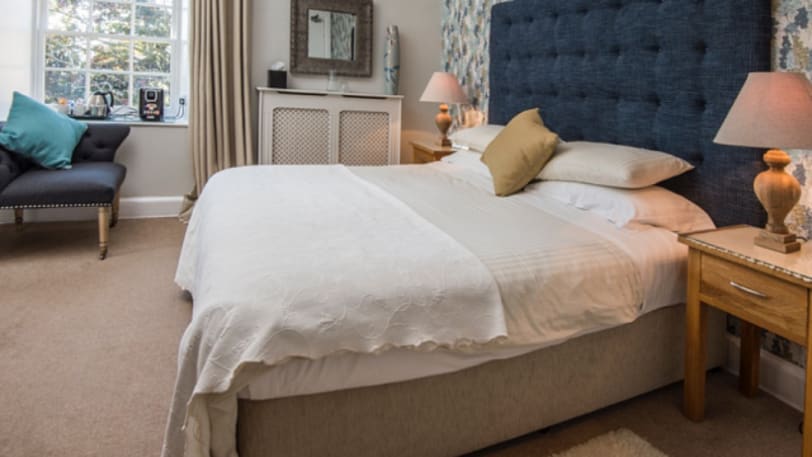
You stay at a selection of B&B, Guest Houses and Hotels
Scotland
You will stay in a selection of Bed and Breakfast, Guest Houses and Hotel. Most of the accommodation have a restaurant or a pub or they can be found in the close proximity, where you can sample local food and craft drinks.
{BOLD} Eating & Drinking {UNBOLD}
All breakfasts are included.
Walking the St Cuthbert’s Way offers a delicious taste of local Scottish and Northumbrian cuisine. Starting in Melrose, you’ll find hearty Scottish dishes like Cullen skink and haggis, while tea rooms along the route serve homemade scones and shortbread. In Northumberland, Wooler offers traditional pub fare like shepherd’s pie and stottie cakes, and as you reach Lindisfarne, fresh seafood such as oysters and crab await. The trail’s food reflects the rural charm of the region, perfect for refuelling after a day’s hike.

The first section begins at the splendid 12th century Melrose Abbey, where the heart of Robert the Bruce is buried. Walk up over the iconic Eildon Hills and take a break to view an incredible vista over the Scottish Borders, towards the Moorfoot and Lammermuir Hills and the mighty Cheviots to the south. Descending from there into the village of Bowden, the path leads on through farmland and woods to Newtown St. Boswells, along the banks of the river Tweed, past the Crystal Well into the village of Maxton. Now on an old Roman road, you will continue through the village passing Lady Lilliard’s Tomb, a well visited grave due to the legend of the lady said to have fought the English at the Battle of Ancrum. If you are not too tired, make a quick detour to climb up to the Waterloo Monument, a local landmark admired by Sir Walter Scott, before returning to the village for your overnight stay. Your hotel will be in Jedburgh and can be reached by taxi, booked and paid locally.

After a restful evening, the St Cuthbert’s Way is easily picked up again and at Monteviot House and leads you out to the countryside along the Monteviot Suspension Bridge. The path ventures through woodland and then farm paths to the rich agricultural land of Cessford and Cessford Castle, built in the 15th Century by the Kerrs, once notorious Border raiders and wardens of the Middle Marches, the castle was abandoned in 1650. Into the village of Morebattle, the route then takes you out along the ridge to Wideopen Hill, with stunning views over the border country on either side, this is the halfway point between Melrose and Holy Island. Continue walking on to Kirk Yetholm for your overnight stay at the Border Hotel (or similar).

Today the Way takes you along the final stretch of another walk, the Pennine Way, with a steep decent to
Halterburn around Green Humbleton, an ancient hill fort before reaching the border of Scotland and England. Following mostly grassy paths, you are now in the Northumberland National Park. Travelling on through Elsdonburn to Hethpool, the route takes you through woodland and along the Cheviot foothills, heading for Yeavering Bell, Northumberland’s largest Iron Age fort, covering some 12 acres. If you are lucky, you may see some of the wild Cheviot goats here before journeying on through the heather, over Gains Law, down to the small market town of Wooler for your overnight stay. Our hotel here is the Tankerville Arms Hotel (or similar).
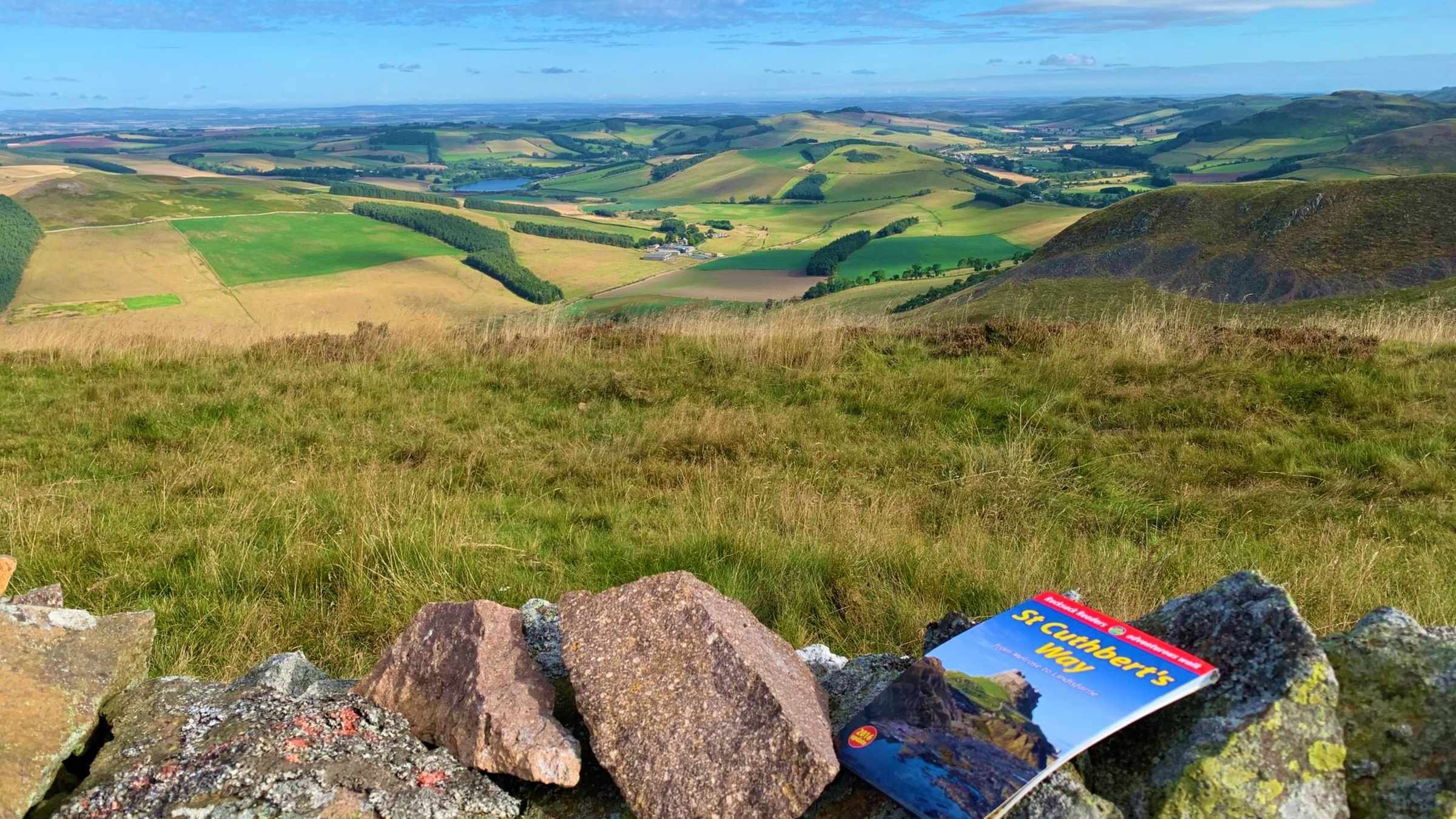
A shorter day as the route takes you to Weetwood Moor, with its surprising collection of prehistoric rock art. Climbing over gentle moorland, crossing undulating farmland before visiting the overhanging rock, which is said to contain St Cuthbert’s cave, the place his disciples rested on the way to Alnwick. Continuing on through woodland and gently rising until the destination, Holy Island can be seen in the distance and with Bamburgh Castle to the south. It is easy to see why this is an area of Outstanding Natural Beauty, as the views are quite astounding. Here the trail again joins another, St. Oswald’s Way, before continuing through Shiellow Wood and the villages of Fenwick and Beal. Overnight hotel will be Lindisfarne Inn at Beal (or similar).

Continue to the coast for the last section of your walk on St Cuthbert’s Way. The path will take you past Fenwick Granary and some World War Two coastal defences, still in place. At low tide, you can choose which way to arrive at Lindisfarne, along the Causeway Road or by following the historic Pilgrims Path across the sands. Remembering to check the tide times is therefore most important! An important centre of the Christian faith since the 6th century AD, the Lindisfarne Monastery was founded in 635. The island has a population of 160, with hundreds of thousands of visitors each year. Overnight hotel will be Lindisfarne Inn at Beal (or on the island itself depending on availability).
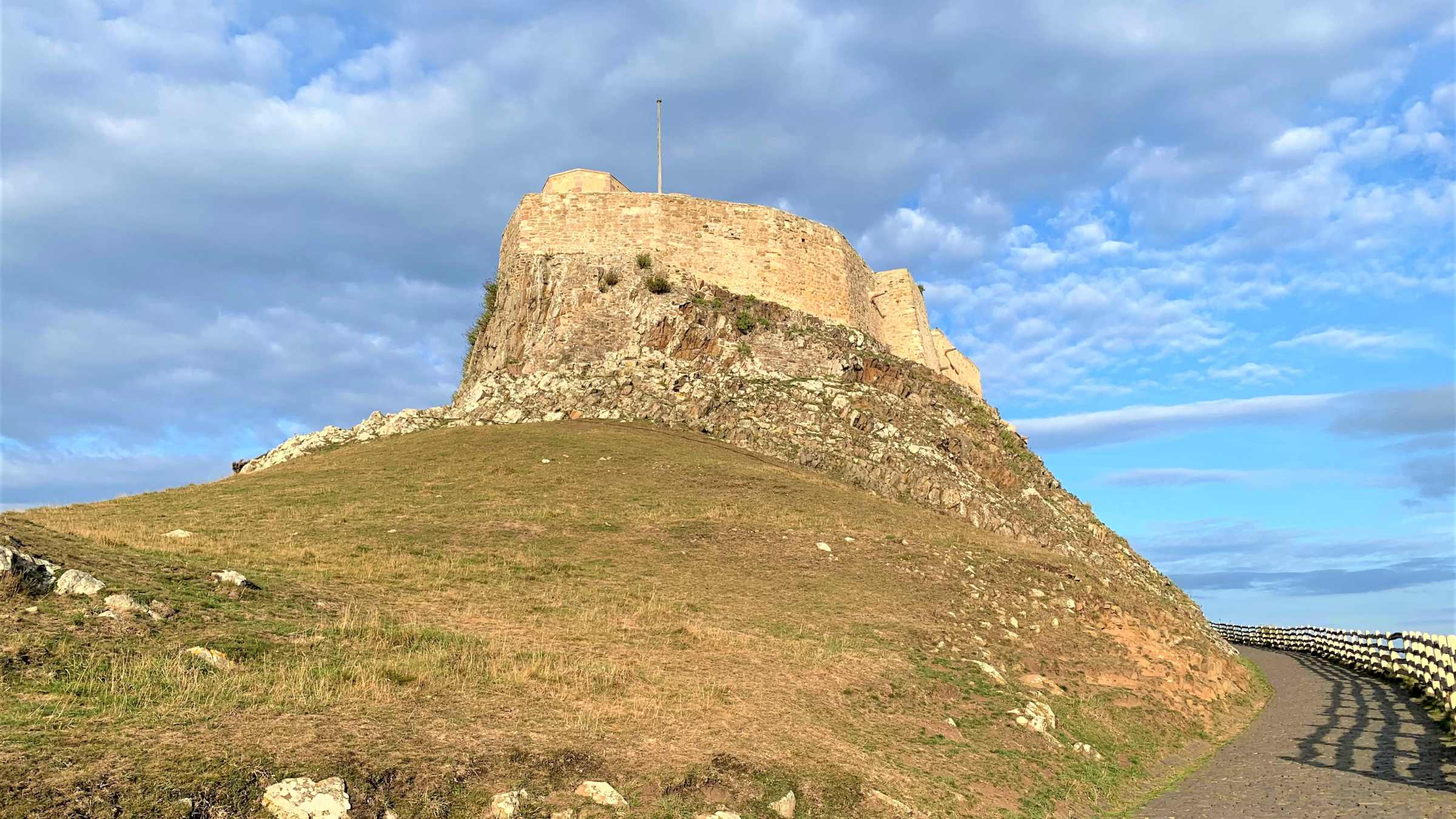
Having completed the St Cuthbert’s Way, you may choose to extend your stay with an extra night on Holy Island or begin your journey home.
13.0
Kg CO₂e
per person, per night
Relative to other Headwater trips
We measure emissions from the parts of the holiday we organise — including accommodation, in-trip transport, meals and activities — and express them as CO₂e per person, per night. Our label doesn’t include your travel to and from the start of the trip. As a Certified B Corp, Headwater is committed to reducing this figure and to positively impacting local communities, the local environment and our staff. Learn more